

Code: 11999
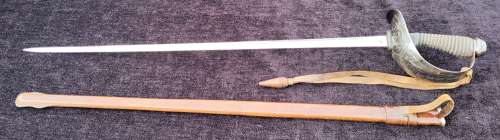
A good example of a regimentally marked 1912 Pattern Cavalry Officers Sword of the 3rd Hussars.
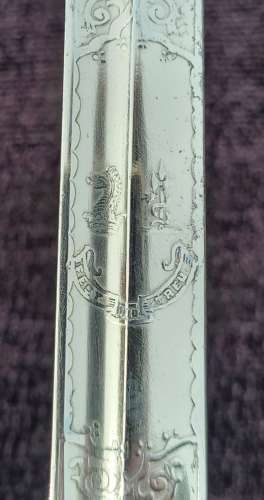
This example is engraved with the dual crests of Tylden and Wright familes.
Therefore, given the regimental connection, this sword can be attributed to Colonel W.R. Tylden-Wright DSO.
Warrington Royds Tylden-Wright (1880-1945) was first commisioned into the 3rd militia battalion of the Kings Own Lancaster Regiment as a Second Lieutenant in February 1900.
He served in South Africa 1900-1902, attached to the Army Service Corps, where he was severely wounded. He took part in the operations in Orange River Colony, May to 29th Nov 1900. In Cape Colony, South of the Orange River. In the Transvaal May and June 1901, and again in the ORC from Nov 30th 1901 to January 1902. Queens Medal 3 clasps, and the Kings Medal 2 clasps.
Post war he served as adjutant of the 3rd Hussars in 1907, and by 1911 he was serving as Adjutant East Riding of Yorkshire Yeomanry as Temp Captain (24th October 1911)
I haven't looked into his WW1 service, except to ascertain that he was awarded a DSO in the 1918 birthday honours, for "For services rendered in connection with Military Operations in France and Flanders". On his gravestone he is listed as a Colonel, so he obviously carried on serving post 1918.
*EDIT* Below is a link to is regimental obituary, which can be viewed in full HERE.
"Many 3rd Hussars will be grieved to hear of the death of Colonel Tylden-Wright, which took place in London on 31st December 1945.
Colonel Tylden-Wright joined the Regiment in 1902 in South Africa from the Manchester Regiment, with which he had been serving during the war, receiving the Queen’s and King’s Medals.
At the beginning of the 1914·18 war, Colonel Tylden-Wright was Adjutant to the East Riding of Yorkshire Yeomanry. He was later attached to the 9th Lancers and held Staff appointments at Divisional and Cavalry Corps Headquarters.
After the war, he attended the Staff College and returned to the Regiment in 1922 to command “B” Squadron at Chanak in the Dardanelles at the time of Mustapha Kemal’s advance on the Allied forces.
He held further Staff appointments until he rejoined the Regiment in Lucknow as Second-in-Command to Lt Col F.R. Burnside, D.S.O., whom he succeeded as Colonel in 1929.
In 1931 he was promoted to full Colonel on transfer as an instructor at the Senior Officers’ School, Belgaum, India. After this appointment, he retired and lived in Frinton and London."
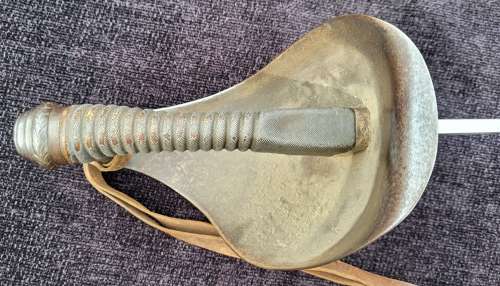
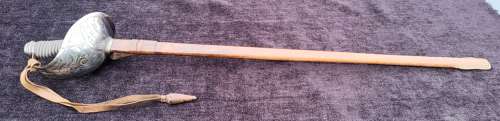
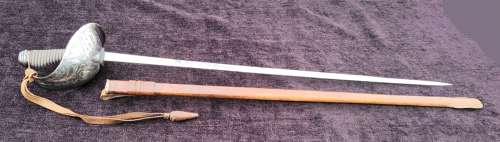
His George V 1912 pattern cavalry officers sword come in good, untouched condition.
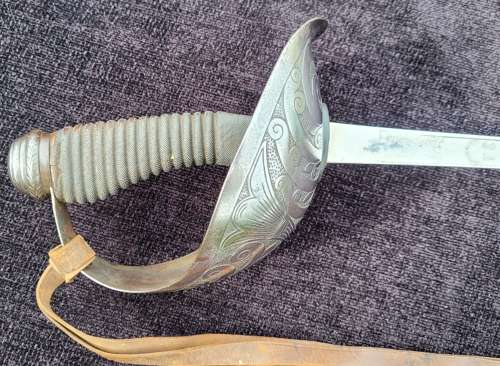
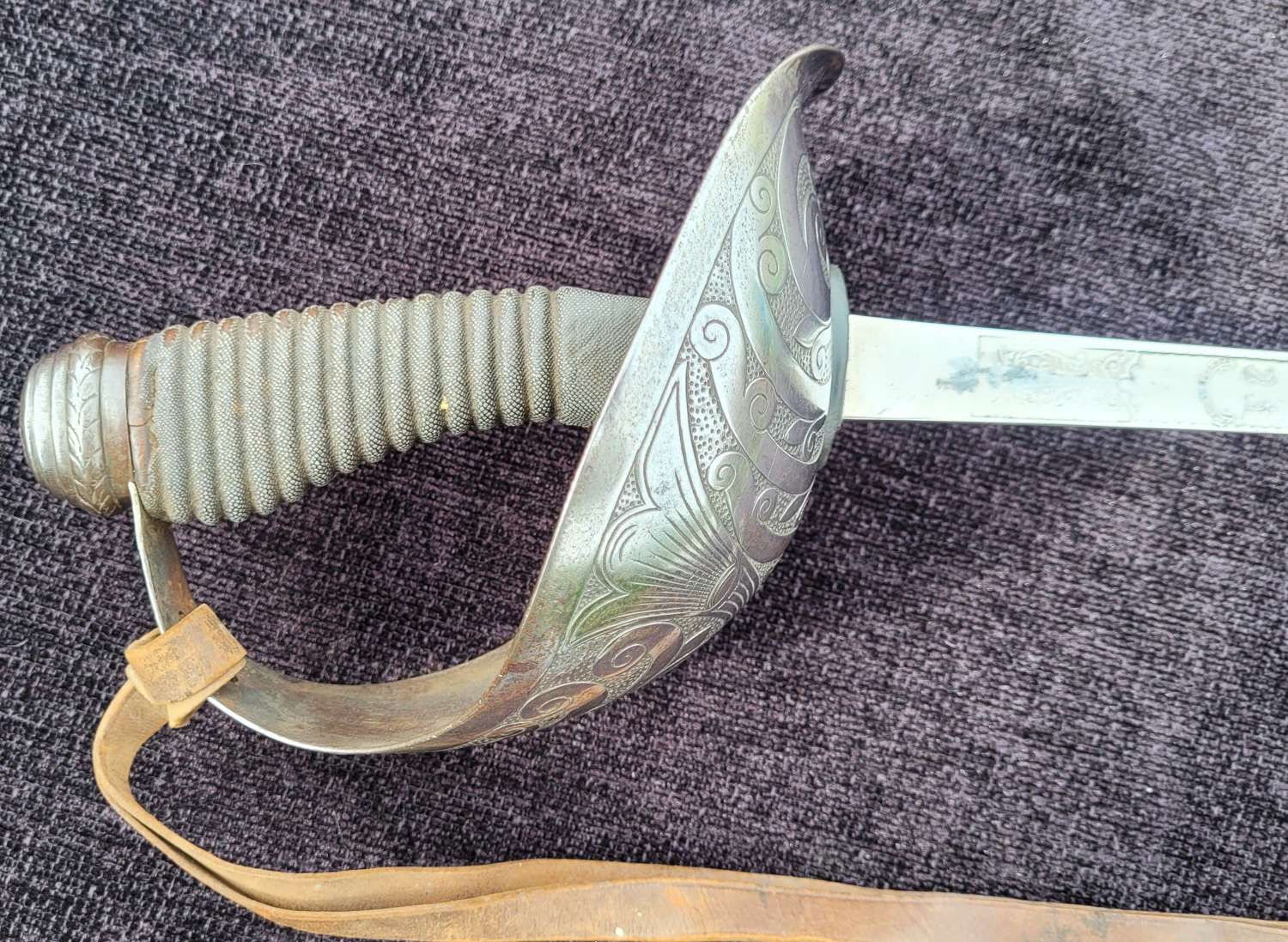
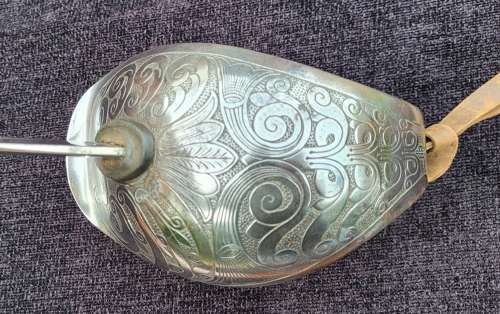
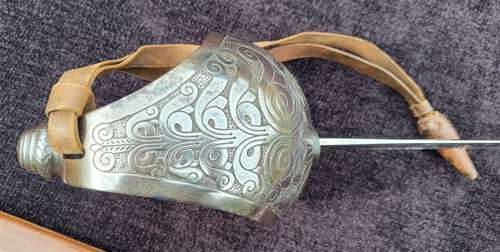
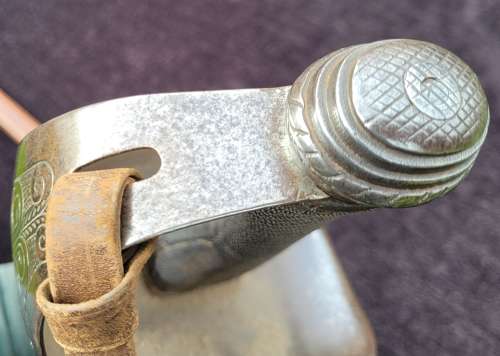
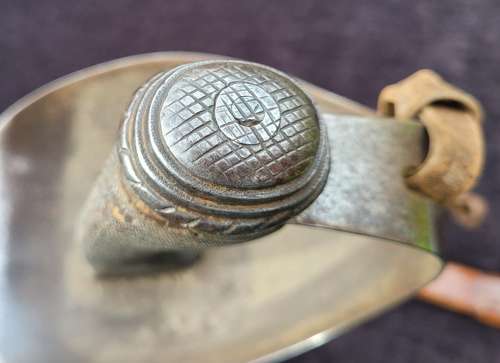
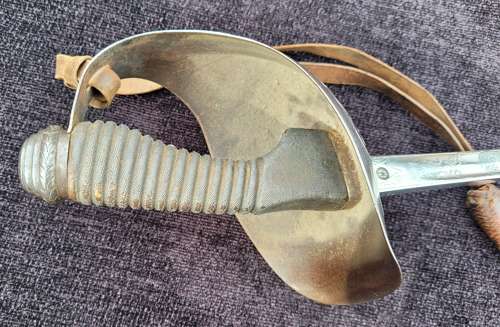
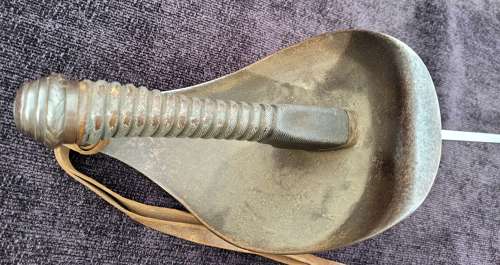
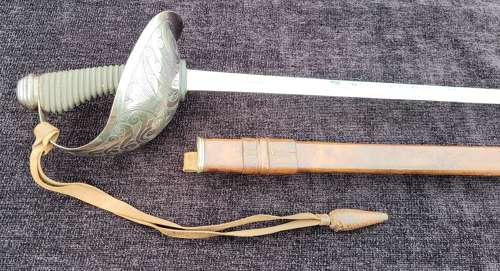
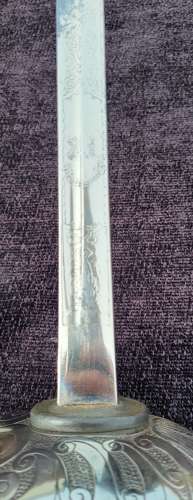
It appears to be an early example, likely one of the first produced. The large bowl guard is of steel and well decorated. Looking closely, I don't think this examples was ever plated. The steel is free from pitting, and could be polished bright if desired. The interior is discoloured, and filled with dust and gime, and would benefit from a clean. The distinctive chequered pommel is attractively domed, the lower stepped section with laurel wreath decoration is also in good condition.
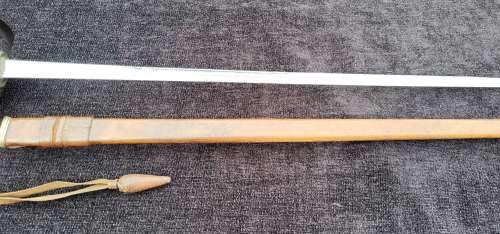
The Shagreen grip is largely complete, with some small areas of loss and wear, as might be expected, but is in generally good condition overall. There is no indication that it was originally bound twistwire, and if it was, it is now absent. The hilt retains its original brown leather sword knot.
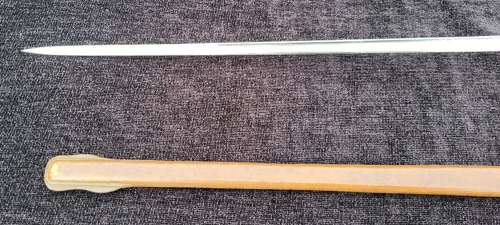
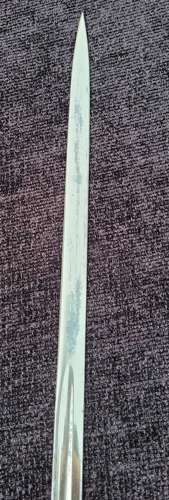
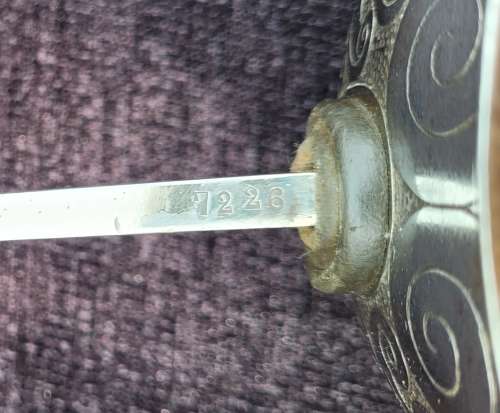
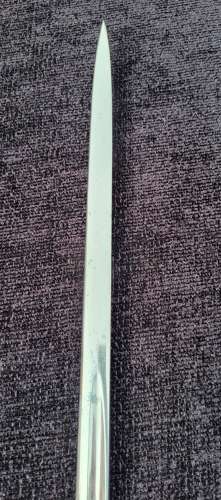
The 35 inch single fullered blade bears no retailers marking at the ricasso, and the other displays the star surmounted proof slug with fleur de lys. This may be a late Charles Reeves Ltd mark, which were a subsidiary of Wilkinson Sword. The spine carries a four digit serial number.
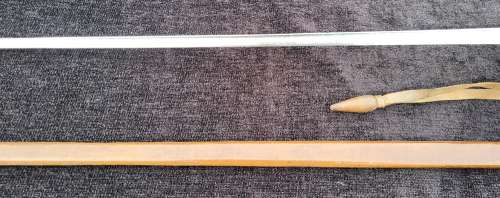
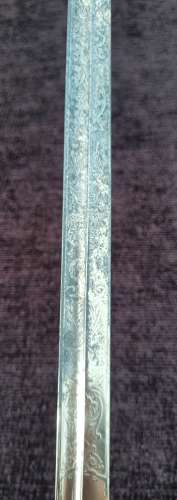
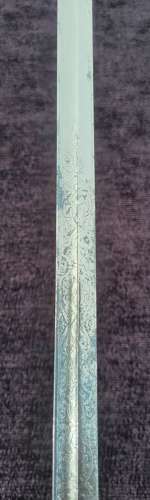
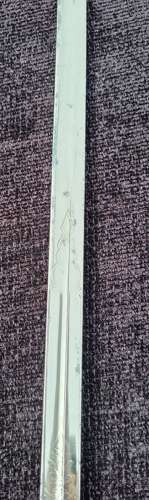
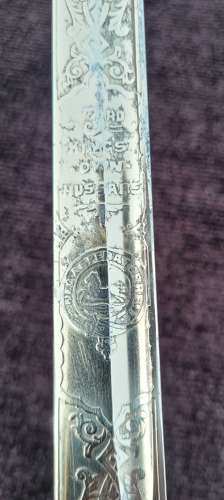
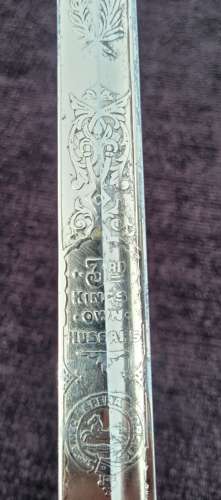
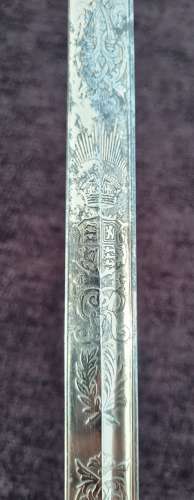
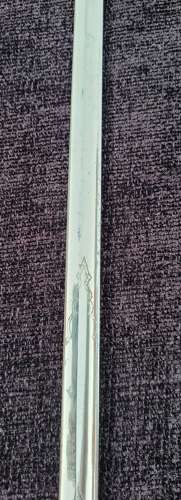
The blade is plated, and I suspect this was done as an optional extra at the time of purchase. It is particuarly well decorated with floral etching, with George V crowned cypher, royal coat of arms, and the officers dual family crests to the right hand escutcheon. The left side bearing the badge and regimental title of the 3rd Hussars. The blade carries some light corrosion/light pitting towards the middle of the blade on the right hand side just below the royal crest, and at the spine in the same area. There is also some light staining and old dirt/grease which could be improved if desired. However, the blade is generally very bright, and the etching is largely crisp and easily visible.
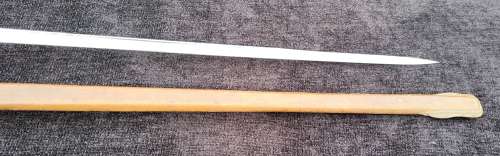
Housed in its original field service scabbard., which is in generally good condition with some minor scuffs. It would benefit from a light clean, feed and polish.
Attributable Great War cavalry officers swords are getting harder to come across, this is an excellent opportunity to acquire an original, untouched example, with excellent opportunities for further research into the original owner.
Strictly over 18's only. Photo ID will be required before this item can be dispatched. Please send this at the time of ordering, to prevent unnecessary delay in your order being dispatched.