




Code: 12291
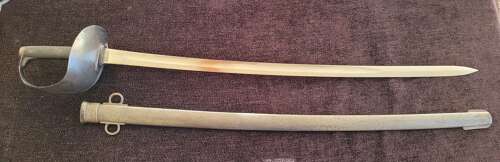
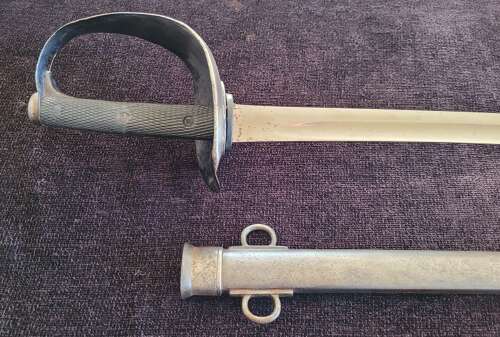
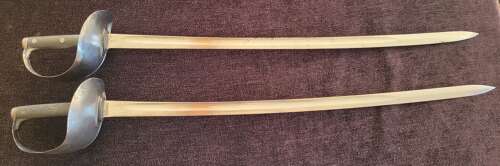
A very interesting and extremely rare example of the 1899 Cavalry Troopers Sword with experimental modifications.
This sword doesn't appear in any of the major British sword publications which I am aware of, and I can only find records of one other, which previously sold at auction.
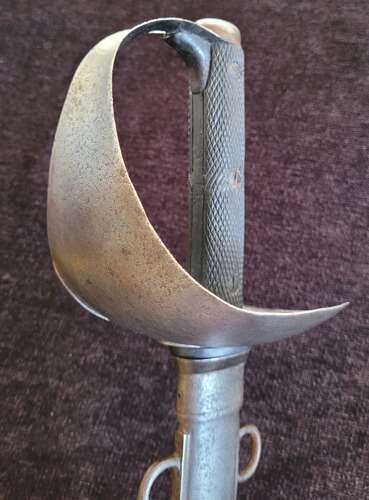
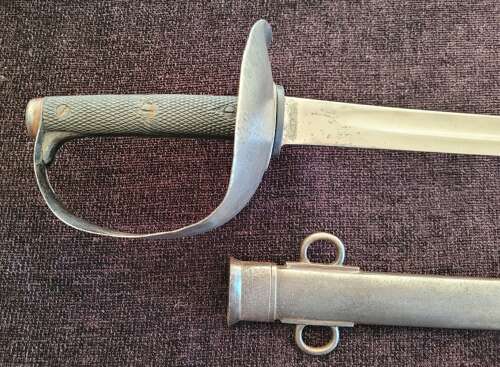
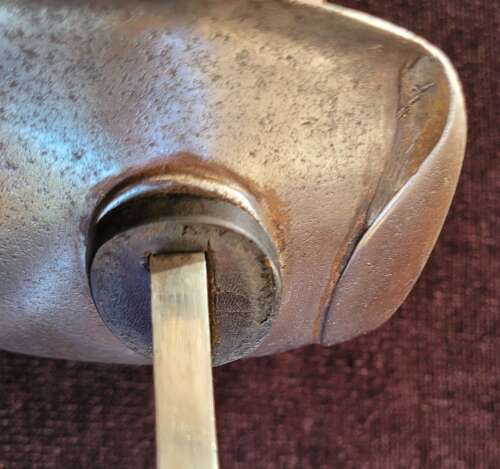
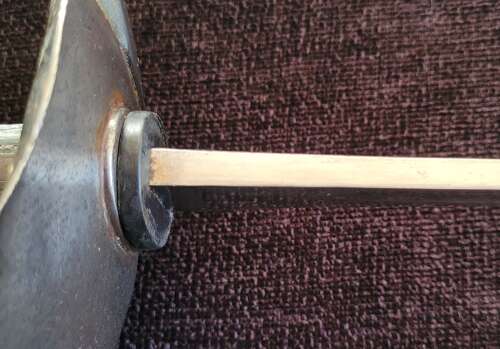
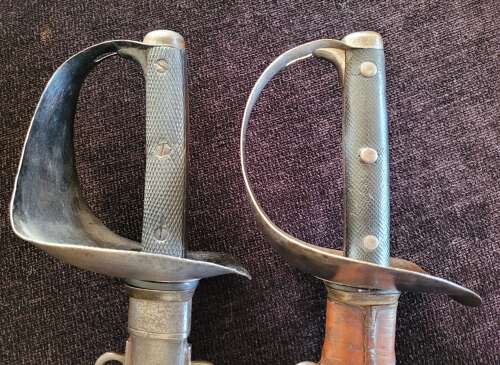
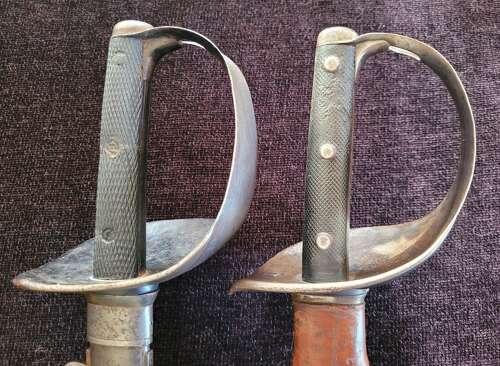
The main differences I can see, from a standard 1899 pattern are the deeply chequered wooden grips. These are fixed with bayonet type bolts, rather than steel rivets. There were apparently complaints regarding the suitability of leather grips during the Boer War, both in robustness, and susceptibility to damage. The rivets made them difficult to replace in the field, a similar complaint was lodged against the standard issue Lee Metford Bayonet, which led to the Mk III and the later 1903 pattern to having bolted grips.
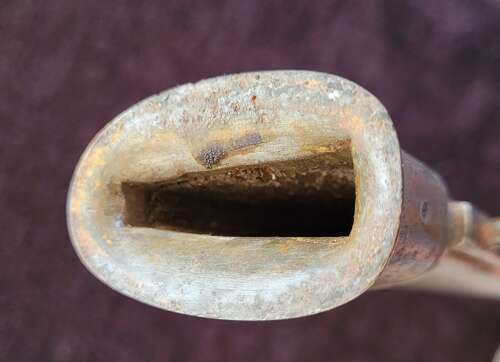
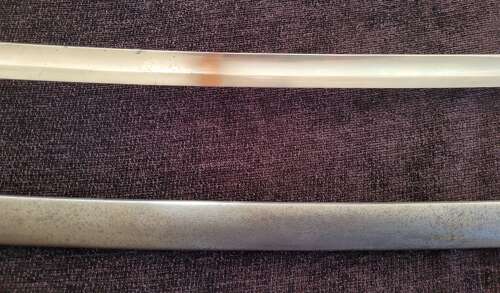
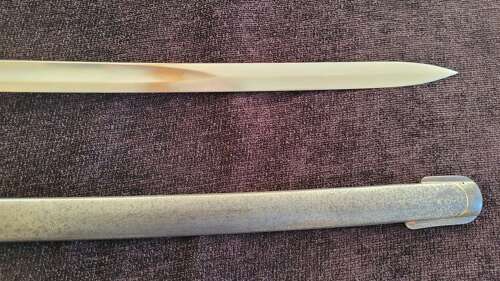
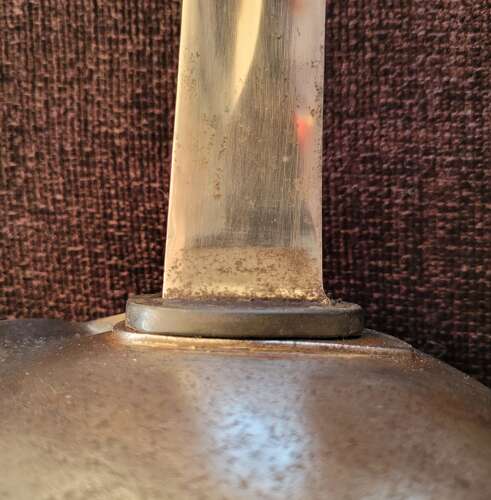
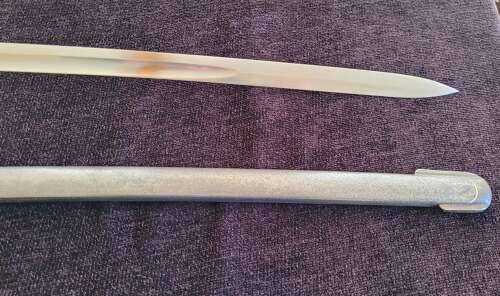
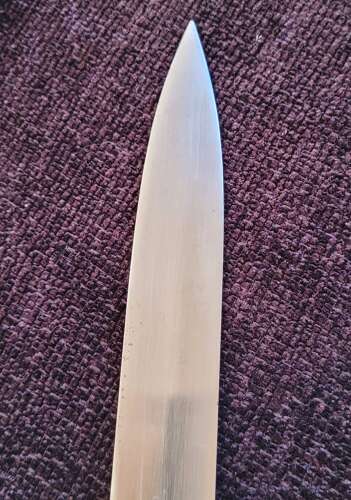
The blade geometry is also slightly different, this example will not fit into a standard 1899 scabbard, it appears to be .25 inch longer, and slightly more curved, and broader at the ricasso. I have included some comparison images with a standard 1899 Pattern to try and help illustrate these differences.
Lastly, this sword carries no markings at all. It does have some faint traces of having a sand/khaki paint applied to the hilt at some point, also traces on the scabbard mouth. The interior of the guard bears a dark painted finish, somewhat akin to japanning.
Whether this sword was trialled for active service, or was just a prototype produced to illustrate changes to be made to the standard pattern is currently unknown. There was certainly an apertite at regimental level for a new sword, designed for the thrust, and less bulky, which was brought to the fore by the Royal Commission on the Boer War of 1903, which in turn led to a special committee the same year to discuss the subject, and demonstrated by the sword trials of 1904 and 1906, which ultimately led to the adoption of the final British cavalry troopers pattern, the 1908.
A very scarce opportunity to own a good example of a previously unrecorded sword, likely produced in the wake of the Boer War, as a last effort to save the pattern from obsolescence.
All untouched and as found.
Strictly over 18's only. Photo ID will be required before this item can be dispatched. Please send this at the time of ordering, to prevent unnecessary delay in your order being dispatched.